 Cinque Terre City Guide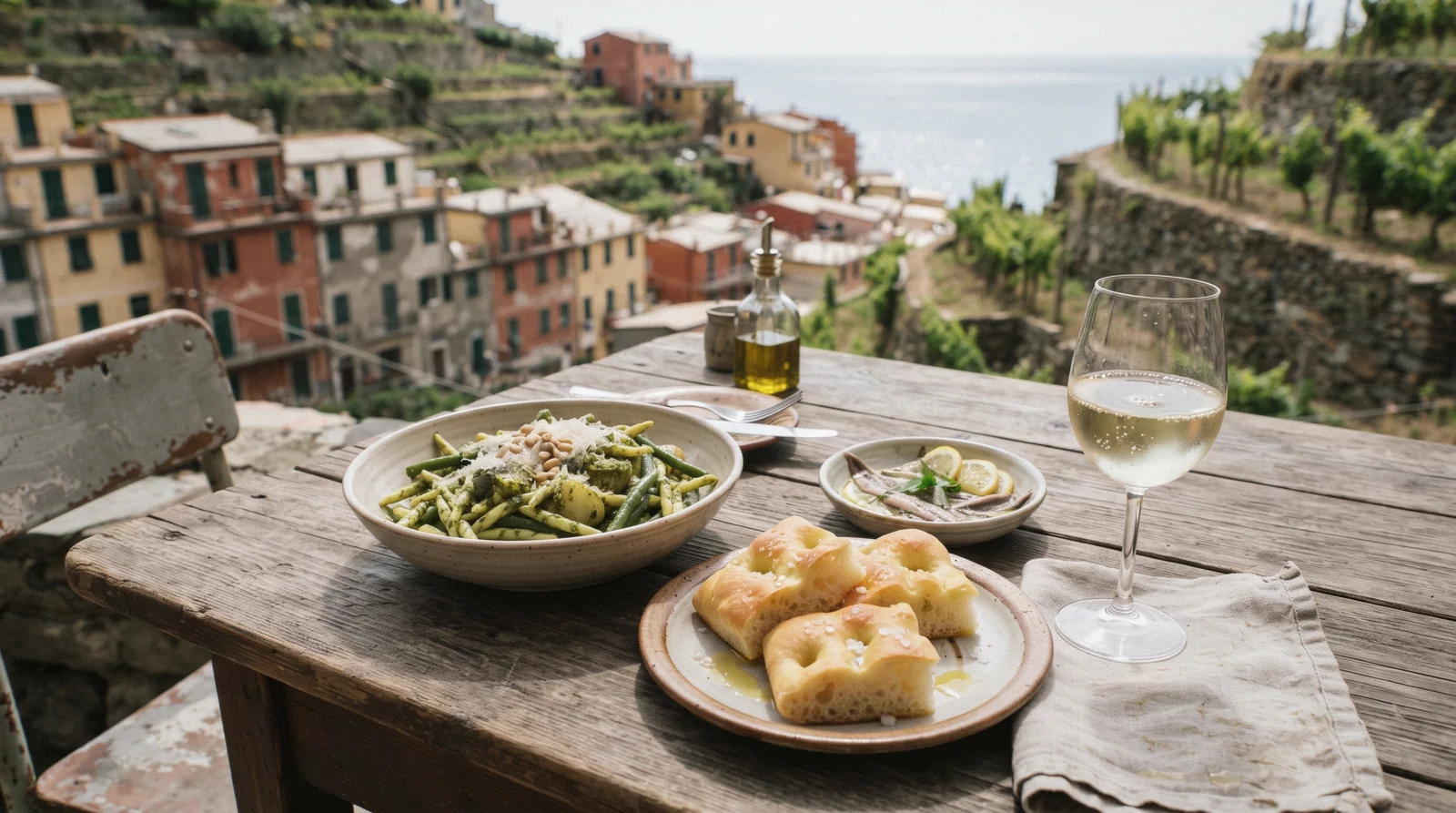
What to Eat in Cinque Terre: Typical Food of the Coast
Ask anyone what to eat in Cinque Terre and the answers repeat fast: pesto, focaccia, anchovies and a golden dessert wine called Sciacchetra. That shortlist is correct, and it comes with useful detail once you dig in. Some of these dishes were born in the Cinque Terre itself. Others came from Genoa up the coast and settled here so firmly that visitors assume they are local. Knowing which is which makes ordering easier and makes the menu less confusing. This page works through the food of this coast dish by dish, then points you to the classes where you can make some of it yourself. For the venues that serve it, see our guide to what to see in the Cinque Terre, which holds the full restaurant and village coverage.
Quick answer The short answer on what to eat in the Cinque Terre
The food most famous in the Cinque Terre is pesto, focaccia, Monterosso anchovies and Sciacchetra, the golden dried-grape dessert wine made on the terraces above the villages.
Key takeaways
- Pesto is a Ligurian dish from Genoa, not from these five villages, but this is one of the best places in the world to eat it made by hand. The pesto making class in Vernazza costs $74.00 and lasts 90 minutes.
- Drink matters as much as food here. The coast's two signature wines, the Cinque Terre DOC white and Sciacchetra, are covered in full on our Cinque Terre wine page.
- This page names dishes, not restaurants. For a sourced list of where to sit down and eat, see where to eat.
The Dishes That Are Actually From Here
Pesto Alla Genovese: From Genoa, Not the Five Villages
Let's settle the first question most visitors ask. Pesto alla genovese originates in Genoa, the Ligurian capital, not in the Cinque Terre. The name gives the game away.
It comes from the Genoese word pesta, from the Italian pestare, to pound, the same root as pestle. According to Wikipedia's entry on pesto, the traditional method uses a marble mortar and a wooden pestle, and the order of work matters. Garlic and pine nuts go in first and are pounded to a paste.
Washed and dried basil leaves follow, ground with coarse salt. Then Parmesan or Grana Padano, pecorino sardo and olive oil are worked in at the end. A basil-based recipe is first documented in the 1850s, with published versions by Emanuele Rossi in 1852 and Giovanni Battista Ratto in 1863.
So when someone asks whether pesto is a Cinque Terre invention, the honest answer is no. What the coast does offer is pesto made the old way, by hand, in the place where the basil grows. Restaurants across the villages serve it, and two of the classes on this page teach you to pound it yourself.
Once you know what goes into a proper pesto, a Cinque Terre tour through the villages is the easiest way to taste it where the basil grows.
Focaccia Genovese: The Dimpled Bread You Eat At Breakfast
Focaccia genovese is the bread you will smell first in every village in the morning. Wikipedia's focaccia entry describes its most recognisable feature, the dimpled surface, called ombrisalli locally. It is finished with olive oil and coarse salt, which gives it the shiny, salted top you see in every bakery window.
Here is the custom that surprises visitors. In Genoa, focaccia is a breakfast food or a mid-morning snack, not a side dish. Locals eat it plain, and sometimes dip it in milk or even cappuccino.
Try it once the local way before you default to the lunchtime sandwich version. One distinction to get straight, because menus in the region can be misleading. Focaccia di Recco, the dramatic paper-thin dough filled with prescinsoea cheese, is a separate Ligurian variant.
It comes from Recco, a town on the Riviera east of Genoa. It is not from the Cinque Terre. If you see it on a menu here, enjoy it, but do not mistake it for local food.
Trofie And Farinata: Two Ways Liguria Stretchened Its Larder
Trofie and farinata both exist because Liguria's terrain made feeding itself hard. Start with trofie. Wikipedia's entry on Ligurian cuisine describes this small hand-rolled pasta, made from wheat flour and boiled potato, twisted into short spirals.
It is the traditional partner for pesto, and trofie al pesto is the single most reliable pasta order in any village trattoria. The spiral shape catches the sauce, and the potato in the dough gives it a soft chew. Then farinata.
This is a chickpea-flour flatbread cooked in a wood-fired oven, crisp on top and soft within. The reason it exists is the same difficult hills. Wikipedia notes that farinata developed because Liguria's hilly terrain made wheat cultivation difficult, so cooks turned to chickpea flour instead.
Versions vary by topping. Depending on where you order it, farinata can come with onions, artichokes, sausage, cheese or young anchovies. The anchovy version is the one to seek out here, since it pairs the flatbread with the coast's own catch.
Anchovies And Torta Pasqualina: The Coast's Catch And Its Easter Pie
Two more dishes belong on your order list. The first is anchovies. Monterosso al Mare is the anchovy village on this coast, and the anchovies served in the villages come from Monterosso's own catch, as our Monterosso guide covers.
They appear in simple forms, often just filleted with oil and lemon, sometimes as the young anchovy topping on farinata. Order them wherever you see them. They taste of the sea in a way that canned anchovies never suggest, and they are the strongest argument for eating fish on this coast rather than inland dishes.
The second is torta pasqualina, which Wikipedia's Ligurian cuisine entry describes as a Ligurian Easter savoury pie of greens and artichokes with cheese, milk curds and eggs. It is a spring dish by origin, but many kitchens make it beyond the Easter season. The layers are substantial and the eggs bake into the filling, so a slice with a glass of the local white makes a light lunch on its own.
Six Dishes to Order
Use this table as a quick-reference when you are standing in front of a menu in one of the five villages. It lists the six dishes and drinks this page covers, what each one is, where it comes from and how it is usually served.
| Dish | What It Is | Where It's From | Usually Served |
|---|---|---|---|
| Pesto alla Genovese | Basil sauce pounded in a mortar with garlic, pine nuts, two cheeses and olive oil | Genoa, Liguria | Tossed with trofie or other pasta |
| Focaccia | Dimpled flatbread (ombrisalli) with olive oil and coarse salt | Genoa, Liguria | Breakfast or snack, sometimes dipped in milk or cappuccino |
| Trofie | Small hand-rolled pasta of wheat flour and boiled potato | Liguria | The traditional partner for pesto |
| Farinata | Chickpea-flour flatbread from a wood-fired oven | Liguria, born of difficult wheat farming | With onions, artichokes, sausage, cheese or young anchovies |
| Torta Pasqualina | Savoury pie of greens and artichokes with cheese, milk curds and eggs | Liguria | An Easter dish, served in slices, warm or at room temperature |
| Sciacchetra | Golden dried-grape dessert wine made by the appassimento method | The Cinque Terre terraces | Small glass with dessert or with dry pastries |
What to Drink on the Coast
Cinque Terre DOC White
If you are asking what drink the Cinque Terre is known for, the answer is two wines. The first is the Cinque Terre DOC white, a dry wine grown on the terraces above the villages. The headline rule is that it requires a minimum 40% Bosco grapes, which gives the wine its structure.
The DOC was recognised in 1973, and the production zone covers Riomaggiore, Vernazza, Monterosso al Mare and two hamlets of La Spezia, so the bottle you order in a village restaurant is genuinely from these slopes. The full detail on grape percentages, minimum alcohol, yield limits and the growers working the terraces is on our Cinque Terre wine page. In practical terms, any fish dish on this page, above all the anchovies, pairs with it, and most village restaurants pour it by the glass.
Sciacchetra
The second is Sciacchetra, the coast's golden dessert wine. Its name comes from the Ligurian verb sciaca, to press or crush the grapes. What makes it special is the method.
The harvested grapes are dried in the sun before pressing, the appassimento approach, which concentrates the sugar and shrinks the yield dramatically. The result is a sweet, intense small-portion wine, and the park authority names it alongside the dry white as one of the two wines that define the territory's identity. It is worth seeking out in the villages as a pour with dessert, and if you want to understand the terraces it comes from, our Cinque Terre wine page carries the full story, the DOC figures and the producers.
Learn to Make It
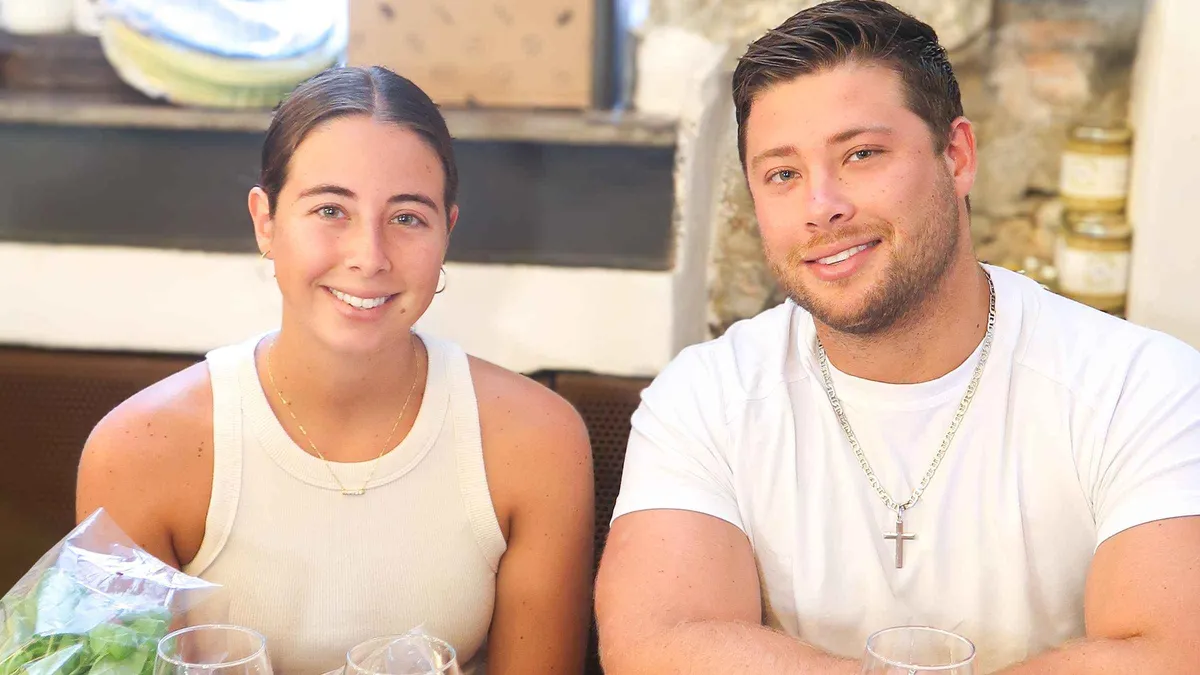
Reading about pesto is one thing. Pounding it in a marble mortar with your own hands, then eating it with local wine, is better. Two bookable classes on this coast teach exactly that.
 from $74.00
Vernazza: Pesto Making Class with Wine and Food Tasting
Cinque Sensi's class in Vernazza pairs a hands-on pesto lesson with three local wines and a plate of cheese and focaccia. Book the lunchtime slot to add gnocchi made with your own pesto, plus a liqueur and chocolate to close.
Check Availability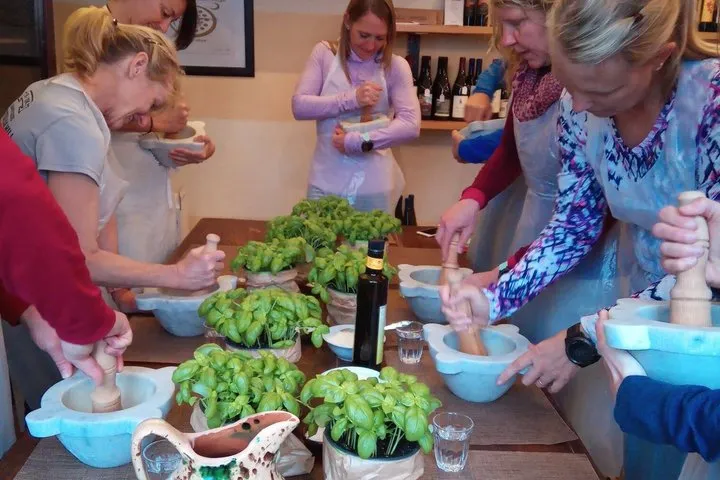 from $96.23
Cinque Terre: Authentic Pesto Cooking Class and Wine in Manarola
CURIOSEETY's Manarola workshop is the shortest and cheapest pesto class on this site, an hour of hands-on mortar-and-pestle work finished with a wine and focaccia tasting rather than a sit-down meal.
Check AvailabilityPrices, ratings and details are the platform's own. Dollar figures are the listed prices. The platform bills in your account's currency.
Where to Actually Eat These
Finding a Table
This page names no restaurants on purpose. Dish knowledge belongs here, venue knowledge belongs on our where to eat page, which carries the sourced list of restaurants across the villages with hours and price ranges. If you would rather learn by doing than by ordering, our Cinque Terre food tours page compares every bookable class on the coast side by side.
Between those two pages and this one, you have the full picture of what to eat in Cinque Terre and where to eat it. Start with the dishes above, pick your village with things to do in the Cinque Terre, and order with confidence.
Cinque Terre Food: Questions
What food is famous in Cinque Terre?
Four things lead the list. Pesto alla genovese served with trofie, dimpled focaccia genovese, anchovies from Monterosso's own catch, and Sciacchetra, the golden dried-grape dessert wine made on the terraces above the villages. Farinata and torta pasqualina round out a solid order list.
Is pesto actually from the Cinque Terre or from Genoa?
From Genoa. Pesto alla genovese originates in Genoa, and its name comes from the Genoese verb pesta, to pound. The first published basil-based recipes date to the 1850s. The Cinque Terre is still a superb place to eat it, because the traditional mortar method survives here and because local classes teach it hands on.
What fish should I order in the Cinque Terre?
Anchovies. Monterosso al Mare is the anchovy village on this coast, and the anchovies served in the villages come from Monterosso's own catch. They are served simply, often filleted with oil and lemon, and they also appear as the young anchovy topping on farinata.
What is the coast's golden dessert wine?
Sciacchetra is the golden dessert wine of the Cinque Terre. Its name comes from the Ligurian verb sciaca, to press the grapes. The harvested grapes are dried in the sun before pressing, the appassimento method, which concentrates the sugar. Our Cinque Terre wine page carries the full DOC detail.
Is focaccia di Recco from the Cinque Terre?
No. Focaccia di Recco is a separate Ligurian variant, made with paper-thin dough and prescinsoea cheese, and it comes from Recco, a town on the Riviera east of Genoa. The local bread here is focaccia genovese, the dimpled, salted, olive oil finished version.
Cinque Terre Food on Film
Three video looks before you go.
The Most AMAZING Food in Cinque Terre!!
A taste-first look at the coast's signature dishes.
Video: The Traveling MangoesCinque Terre Food Tour: Top Foods to Try in Cinque Terre, Italy
A food-first walk through what the coast serves.
Video: Sharing the RoadBest Places to Eat in Cinque Terre
A tour of the coast's best-known dining spots.
Video: Where to NauVideos load from YouTube only when you press play.
Prices, hours and terms are set by the venue or operator and confirmed at checkout.
We may earn a commission if you book through one of our links, at no extra cost to you. Full affiliate disclosure