 Cinque Terre City Guide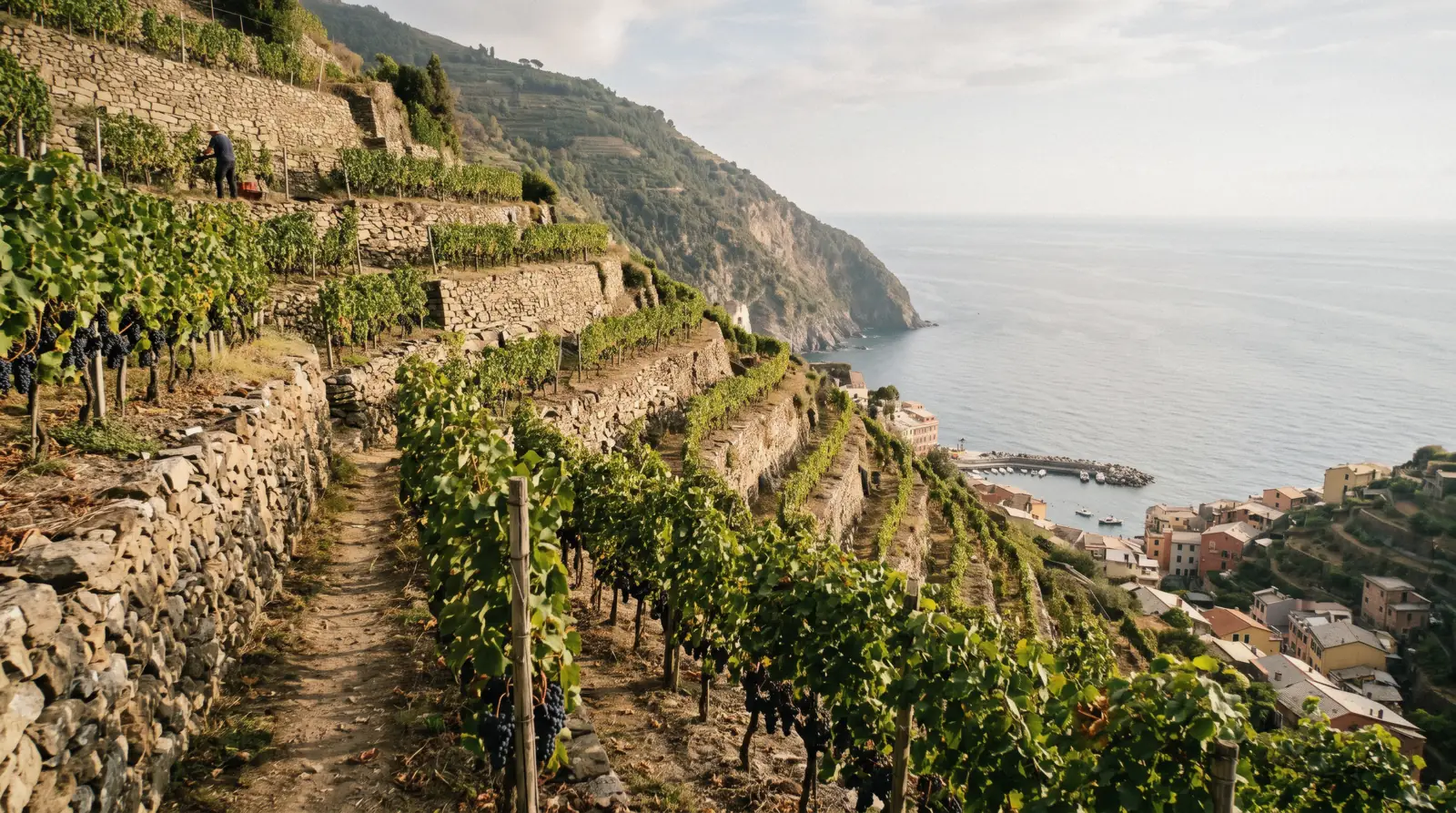
Cinque Terre Wine and Sciacchetra: The Real Story
The five villages are famous for fishing, pasta and anchovies, but the oldest crop on this coast is the grape. Cinque Terre wine is a dry white built on the Bosco grape, and its sweet sibling Sciacchetra is one of Liguria's rarest pours. Both come from vineyards balanced on dry-stone terraces that climb the hillsides above the sea, worked by hand because no machine could stand there. This page explains the DOC rules in plain terms, tells the story behind Sciacchetra and its appassimento method, and shows you two ways to taste the real thing on a working terrace. The facts here come from Wikipedia's citation of the 1973 decree and from the national park's own site, and anything we could not verify is said so plainly. Start with the quick answer, then decide which tasting fits your route. For the wider picture, our guide to what to see in the Cinque Terre covers villages, transport and trails.
Quick answer Cinque Terre wine and Sciacchetra at a glance
Cinque Terre wine is a dry white DOC recognised in 1973, made from a minimum 40% Bosco grapes. Its sweet counterpart is Sciacchetra, a golden dessert wine.
Key takeaways
- Sciacchetra is made by the appassimento method: grapes are dried in the sun before pressing, which concentrates the sugar.
- To taste it where it grows, book the wine tasting and scenic vineyard tour in Vernazza at $85.00, or the cellar tasting above Manarola at $74.00.
- Pair the white with the local kitchen using our guide to typical food in Cinque Terre.
The DOC Rules in One Table
What the rules say
The Cinque Terre DOC was recognised in 1973 by a decree of 29 May of that year, which Italian Wikipedia's Cinque Terre wine entry cites as the founding document. The production zone covers Riomaggiore, Vernazza and Monterosso al Mare, plus the Tramonti di Biassa and Tramonti di Campiglia hamlets of La Spezia. The white must be built on at least 40% Bosco grapes, with up to 40% combined Albarola and Vermentino and up to 20% other approved white grapes for the province of La Spezia.
Sciacchetra starts from the same base grapes but the harvest is dried before pressing, which is why its conversion from grape to wine is so low. The yields are capped at 90 quintals of grapes per hectare for both wines. One honest note: the official disciplinare PDF on the agriculture ministry's site could not be reached directly, so the figures here follow Wikipedia's citation of the 1973 DPR.
| Rule | Cinque Terre DOC White | Sciacchetra |
|---|---|---|
| Minimum grapes | 40% Bosco, up to 40% Albarola/Vermentino, up to 20% other | Same base grapes, dried before pressing |
| Minimum alcohol | 11.5% | 17% total, at least 13.5% fermented |
| Max yield per hectare | 90 quintals | 90 quintals |
| Wine conversion | Up to 70% | Up to 35% |
| Zone | Riomaggiore, Vernazza, Monterosso al Mare, Tramonti di Biassa and Campiglia | Same zone |
Why the numbers matter
The 35% conversion for Sciacchetra tells you everything about its cost. Most of the grape's weight disappears during drying, so it takes roughly three kilos of fruit for every litre of dessert wine. The white's 11.5% minimum alcohol marks it as a light coastal wine, while Sciacchetra's 17% total includes at least 13.5% that has actually fermented, with the rest left as residual sugar from the dried grapes.
That is the whole trick of the style: fermentation stops or is halted while plenty of sweetness remains. If you want to understand the difference in one afternoon, the wine tasting and pesto class at BarCa in Volastra pours three of the estate's own Cinque Terre wines in a cellar above Manarola.
What Makes Sciacchetra Different
The appassimento method and the name
Sciacchetra is the famous dessert wine of the Cinque Terre. Its production follows the appassimento method: harvested grapes are laid out and dried in the sun before pressing, a slow process that concentrates sugars and aromas inside the fruit. The national park's own site describes the result as a golden dessert wine and names it, alongside the Cinque Terre white, as one of the two wines that make up the territory's identity.
The name itself is old Ligurian. Italian Wikipedia's Cinque Terre wine entry derives Sciacchetra from the verb sciaca, meaning to press or crush the grapes. In other words, the wine is named after the work itself, the crushing of dried fruit into something sweet and rare.
Vines on the terraces since Roman times
Wine here is not a modern marketing idea. English Wikipedia's Cinque Terre wine entry notes that Corniglia's wine has been known since Roman times, which makes these some of the oldest documented vineyards on the Italian coast. For centuries the five villages were isolated fishing settlements, and that changed only when the railway reached them in 1874.
The vineyards themselves survive because of the terraces held up by dry-stone walls, which the Parco Nazionale delle Cinque Terre describes on its own site as the visible sign of an ancient agricultural culture. UNESCO inscribed the same terraced landscape as a World Heritage site in 1997, and the national park itself was established in 1999. The park frames sloped viticulture as a defence against land abandonment and hydrogeological instability.
Every glass you drink helps keep those walls standing. You can walk through this landscape on the park's paths, covered in our Cinque Terre National Park guide. Tasting the wine starts with getting to the villages, and a good place to compare options is this overview of Cinque Terre tours.
Taste It on the Terraces
Two small producers run tastings you can book, one above Manarola and one in Vernazza. Both pour estate wines in the landscape where the grapes actually grow.
 from $74.00
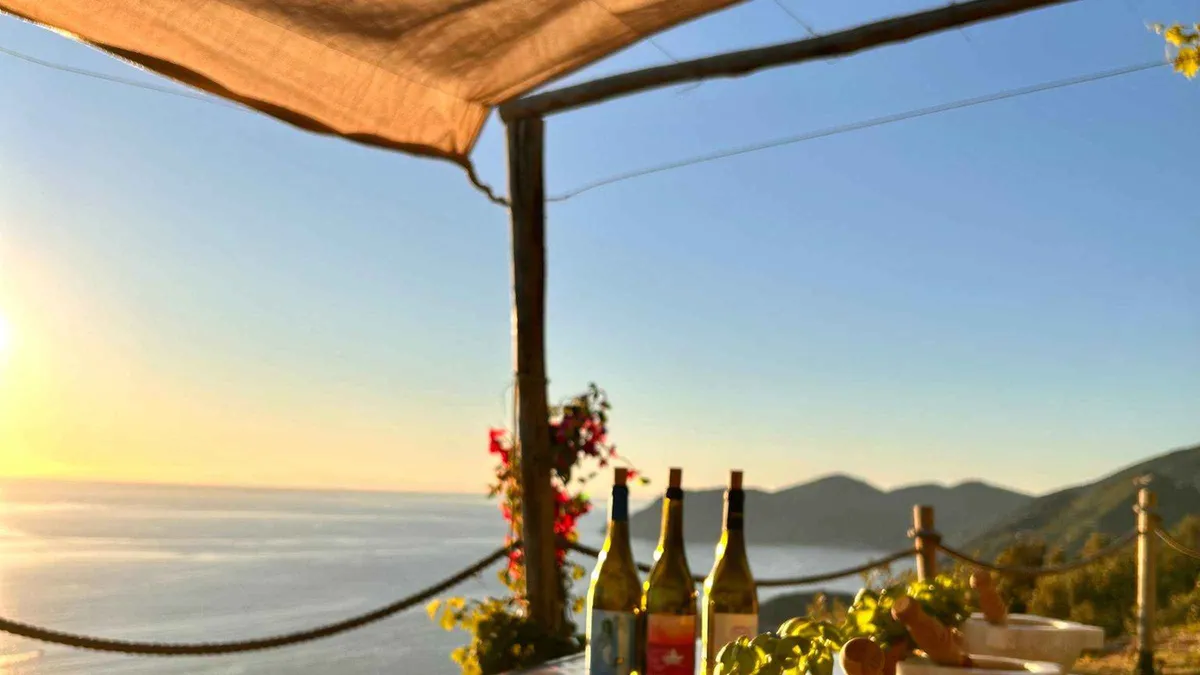
Volastra: BarCa Wine Tasting in Cinque Terre and Pesto Class
BarCa pours three of its own Cinque Terre wines in a cellar above Manarola and folds a pesto-making lesson into the same two hours. The village of Volastra sits well up the hillside, so it is not step-free.
Check Availability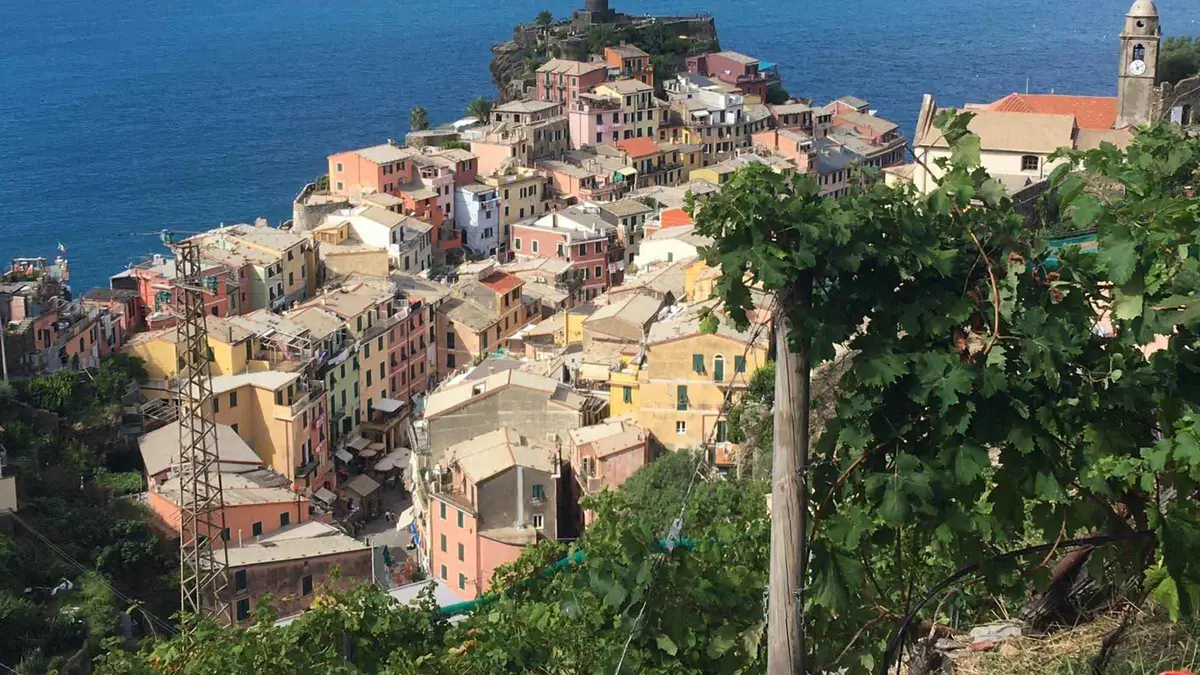 from $85.00
Vernazza: Wine Tasting and Scenic Vineyard Tour
A small family winery, Cheo, walks small groups from the Vernazza post office up into its own terraced vineyard for a tasting with a sea view, then back down. It's a shorter, cheaper outing than the guided vineyard treks sold as hikes.
Check AvailabilityPrices, ratings and details are the platform's own. Dollar figures are the listed prices. The platform bills in your account's currency.
What Is Not Published
The honest gap
Three things you will see quoted elsewhere are not published in any source this page could reach. Nobody has an official figure for hectares under vine in the DOC, for annual bottle production, or for any consortium pricing or production numbers from the Consorzio Cinque Terre. If a site quotes those, treat it with care.
We say so plainly rather than guess. What this page does cover instead is the taste side: how the wine is made, what the rules require, and where to drink it. For what to eat with your glass, our guide to typical food in Cinque Terre covers anchovies, trofie and pesto.
If you want restaurant settings and wine service, that belongs to where to eat in Cinque Terre. For everything else on the coast, from trails to villages, go back to the full guide to things to do in the Cinque Terre.
Cinque Terre Wine: Questions
What wine is Cinque Terre famous for?
Two names. The Cinque Terre DOC white, a dry wine built on a minimum 40% Bosco grapes with Albarola and Vermentino, and Sciacchetra, the sweet dessert wine made from sun-dried grapes. The national park's own site names both as the territory's wine identity.
What is Sciacchetra?
A golden dessert wine from the same zone as the white. The grapes are dried in the sun before pressing, the appassimento method, which concentrates the sugar. It must reach 17% total alcohol with at least 13.5% actually fermented, the rest being residual sugar. The name comes from the Ligurian verb sciaca, to press or crush the grapes.
When was Cinque Terre DOC recognised?
In 1973, by a decree of 29 May 1973. Italian Wikipedia's Cinque Terre wine entry cites that decree as the origin of the designation. Viticulture in the area is far older, since Corniglia's wine has been known since Roman times.
Can I taste Cinque Terre wine on the vineyard terraces?
Yes. In Vernazza, the Cheo family winery walks small groups from the post office up into its own terraced vineyard for a tasting with a sea view, 1h 30m at $85.00. Above Manarola, BarCa pours three of its own wines with a pesto class in Volastra, 2 hours at $74.00.
Is there a set price for a bottle?
No. Neither bottle prices for the DOC wines nor any consortium pricing figures are published in any source this page could reach, so none is claimed here. Expect scarcity on Sciacchetra because the drying process converts only up to 35% of the grape weight into wine.
Cinque Terre Wine on Film
Three video looks before you go.
Rick Steves Presents: Sciacchetra, Cinque Terre Liquid Gold
A short explainer on the dessert wine and its terraces.
Video: The TravelphileWhat the Hell Is Sciacchetra? The Sweet Secret of Cinque Terre
A plain-language look at the appassimento method.
Video: The SpillCinque Terre Wine Tasting
A tasting filmed on the coast's vineyard terraces.
Video: Anytime Travel SolutionsVideos load from YouTube only when you press play.
Prices, hours and terms are set by the venue or operator and confirmed at checkout.
We may earn a commission if you book through one of our links, at no extra cost to you. Full affiliate disclosure